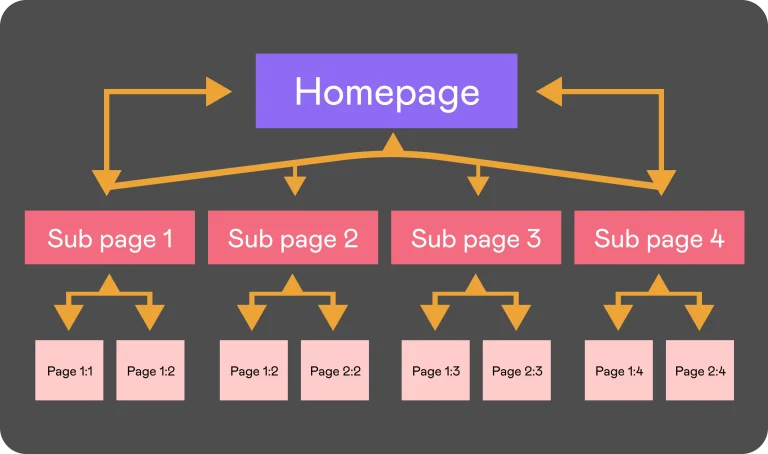

A link building strategy from scratch is a step-by-step plan for growing your backlink profile: the first months go into preparation and a trust foundation, followed by planned link buying for priority pages at a controlled pace. For a young site, a safe start is 5–8 links a month with gradual growth and no sharp spikes. Below is a ready-made month-by-month plan for 6 months, with link types, page priorities and checkpoints.
Key points in 30 seconds
- Month one isn’t about links but the foundation: technical SEO, keywords, competitor donor analysis.
- A sudden link spike is harmful for a young site: build the pace gradually.
- The core of the profile at the start is crowd links and trusted mentions; outreach and permanent links come later.
- Links point to priority landing pages, not just the homepage.
- Monthly checks: indexing, ranking trends, profile health.
Where the strategy starts: preparing for the first link
Building links to a site that isn’t technically ready is like filling a bucket with no bottom: the effort is real, the result isn’t. Before you buy your first link, cover the basics:
- Technical audit and indexing. If priority pages aren’t indexed or load slowly, links won’t work at full strength.
- Keywords and landing pages. Decide which pages you’re promoting and for which queries: that’s where the link equity will go.
- Competitor analysis. Export the profiles of 3–5 competitors from the top results: how many referring domains they have, which link types and anchors. That’s your benchmark for volume and pace, so there’s no need to guess.
We cover how to calculate the volume in a separate article, how many links you need to reach the top, and how to pick sites in the guide how to check a site’s trust and choose a donor. If you’re just getting into the topic, start with the core article what is link building.
Let’s be honest. If competitors built their links over years, trying to catch up in 6 months with one big push is a bad idea, and Google tends to agree. A sudden spike is a risk signal in itself, so we plan a realistic pace (more on that in does a sudden spike in backlinks hurt).
Step 1. A one-day technical audit
Links help Google find and evaluate a page, but only if that page can be crawled and indexed. Google explains the process in its guide “How Search works”: crawling, then indexing, and only then ranking. For a strategy from scratch, a minimal audit is enough:
- Connect Google Search Console and check whether your priority pages are indexed (URL Inspection tool).
- Make sure the pages aren’t blocked in robots.txt, don’t carry noindex and don’t have a canonical pointing to another URL.
- Check the speed and mobile version of your main landing pages.
- Open the Links report in Search Console: it shows which external links Google already sees. For a new site, this is the baseline you will compare against every month.
A detailed list of checks is in our article on the technical SEO audit, and console setup is covered in the Google Search Console setup guide.
Step 2. Competitor link gap analysis
A link gap analysis answers two questions: how many referring domains you are missing and where to get them. The working sequence follows the one Semrush describes in its competitor backlink guide, with our adjustments for the Ukrainian market:
- Take 3–5 sites that consistently rank in the top 10 for your target queries. Use your search competitors, not your offline ones.
- Export the number of unique referring domains for each and calculate the median. The median is more robust than the average: one giant with thousands of links won’t distort the picture.
- Find domains that link to two or more competitors but not to you. These are the warmest prospects: they have already shown they link to sites in your niche.
- Group them by type: forums, directories, media, blogs, partners. This shows you what the leaders’ profiles are made of, so you replicate the structure rather than individual links.
- Look at competitors’ anchors: how many are branded, naked URL and commercial. That is the upper limit of aggressiveness you shouldn’t exceed.
An illustrative calculation. Three competitors have 40, 55 and 70 referring domains; the median is 55. You have 5. The gap is 50 domains. The planned pace in the table below gives 62–91 links over 6 months. Since some links will come from domains you already have and some won’t get indexed, that is exactly the buffer you need to close the gap in half a year without spikes. The full method is covered in our article on competitor backlink analysis.
Month-by-month link building plan for 6 months
The plan below is a working framework. Link counts are guidelines for a site in a moderately competitive niche: in YMYL and highly competitive niches the numbers are higher, in narrow niches lower. Use the competitor median as your starting point, not abstract numbers.
| Month | Stage focus | Link types | Links/mo | Target pages |
| 1 | Foundation and first trusted links | Crowd links, profile links, trusted mentions | 5–8 | Homepage, branded queries |
| 2 | Scaling crowd links | Crowd links on niche forums, review sites, Q&A | 8–12 | 1–2 priority categories/services |
| 3 | Adding outreach | Crowd links + first guest posts and niche edits | 10–15 | Key commercial pages |
| 4 | Boosting landing pages | Outreach, permanent links, supporting crowd links | 12–18 | Commercial pages + categories |
| 5 | Anchors and tier 2 | Outreach + tier 2 to the best donors | 12–18 | Pages close to the top 10 |
| 6 | Scaling and filling gaps | Mixed profile to close gaps with competitors | 15–20 | Lagging priority pages |
Months 1–2: foundation
We start with crowd marketing and trusted mentions: this is the most natural start for a young profile. Live discussions on forums and in niche communities give you a safe first layer of links and bring real traffic at the same time. This is also the time to create company profiles on Google Business Profile, industry directories and social networks: these branded links make the profile look natural.
Months 3–4: expansion
By now the profile has some muscle, so we add outreach and permanent links on trusted donors. Quality matters as much as quantity: one link from a live, relevant site outweighs ten from junk sites. This is also the moment to prepare at least one “link magnet” on your site: a study, calculator, checklist or reference page that is easy to link to during outreach.
Months 5–6: targeted work and scaling
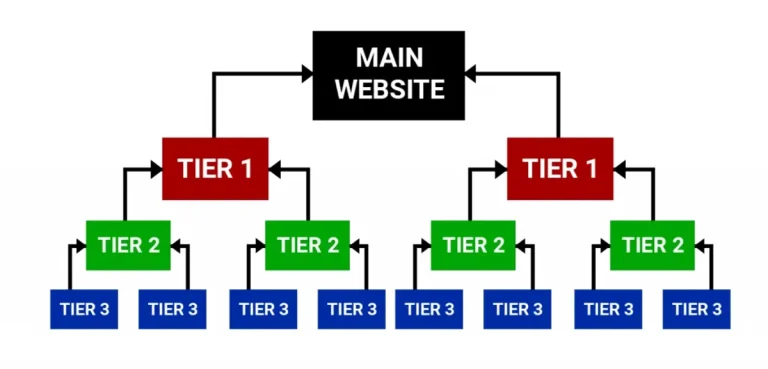
We look at which pages have come close to the top 10 and boost those specifically, including with a tier 2 setup (links to your own backlinks to speed up indexing and pass more weight). The multi-tier setup is covered in the article on tier 1, tier 2 and tier 3. At the end of month six, repeat the competitor gap analysis: it becomes the basis for the plan for the next six months.
What must never be in the plan: automated link blasts, mass guest posts with identical anchors and excessive link exchanges. Google explicitly lists all of these as examples of link spam in its spam policies.
From our practice
Most plans “break” in the first two months, because crowd links turn out to be harder than expected. When we checked 16.5 thousand forums in October 2026, only 39% of those where we could verify registration had it open, and another 14% let you in after accepting the rules. Where we could detect a captcha, 37% of forums used reCAPTCHA. And for a Ukrainian site the main constraint is language: only about 10% of live forums are in Ukrainian (roughly 1,420 out of 14,869), with another 3% mixed. That is why, for a Ukrainian-language project, we build both Ukrainian and relevant mixed-language sites into the plan in advance instead of searching for them at the moment of placement.
Page priorities: where to send links first
A classic beginner’s mistake is pointing every link at the homepage. The homepage feels flattered, the money pages feel forgotten. Distribute the weight deliberately:
| Priority | Page type | Share of links | Why |
| 1 | Commercial pages ranking 11–20 | ~35% | Closest to the top: quick results |
| 2 | Categories and services | ~25% | Commercial intent, conversions |
| 3 | Core blog articles | ~20% | Traffic + internal links to money pages |
| 4 | Homepage and branded queries | ~20% | A natural-looking profile |
The proportions are adjusted to the niche, but the logic stays the same: first what’s closest to revenue and to the top, then core articles that support commercial pages through internal links, and the homepage only as a background layer. To make sure weight from core articles reaches your commercial pages, plan your internal linking before you start buying links.
Anchors and a safe pace
At the start, the profile should look natural: branded and naked links dominate (company name, URL, “here,” “on the website”), and commercial keyword anchors are added later in a small share. Overusing exact-match commercial anchors is one of the most common causes of a penalty. Keep your link velocity within what competitors show: for a young site, a sudden spike is more dangerous than a slow start (more on that in does a sudden spike in backlinks hurt).
Anchor plan by stage
In its link best practices, Google advises that anchor text be descriptive, relevant and reasonably concise. For link building, this means an anchor should read as a natural part of the sentence, not as an inserted keyword. Here are the starting proportions we use for new sites. These are our working guidelines, not a standard: check the final shares against your competitors’ profiles.
| Anchor type | Example | Months 1–2 | Months 3–6 |
| Branded | “Links-Buy”, “at Links-Buy” | 40–50% | 30–35% |
| Naked URL | links-buy.online | 25–30% | 20–25% |
| Generic | “here”, “on this site”, “learn more” | 15–20% | 15–20% |
| Partial match | “buy crowd links for an online store” | 5–10% | 15–20% |
| Exact match | “crowd links” | 0–3% | up to 5–7% |
Our anchor text generator helps you build an anchor list with these proportions, and the step-by-step method is described in the article how to create an anchor plan. If your profile is already skewed, check it with the anchor text analyzer.
Monthly budget, using Links-Buy prices as an example
Market prices for outreach and permanent links vary widely by donor, so as an example we will calculate only the crowd-link base of the plan using our price list: 86 UAH per link for orders of 20–39, 79 UAH for 40–79, 76 UAH for 80–99 and 70 UAH from 100 links. The minimum order is 20 links.
| Scenario | Crowd links | Price per link | Total |
| Minimum start (months 1–2) | 20 | 86 UAH | 1,720 UAH |
| Six-month crowd base, narrow niche | 40 | 79 UAH | 3,160 UAH |
| Six-month crowd base, moderate competition | 80 | 76 UAH | 6,080 UAH |
| Crowd links for several product lines or languages | 100 | 70 UAH | 7,000 UAH |
If you order a package up front, align the placement pace with your plan: the package volume must not turn into a spike in a single month. You can model your own scenario in the link budget calculator or get a month-by-month breakdown right away with the link building plan tool.
Checkpoints: what to check every month
A strategy without monitoring quietly turns into a monthly donation to donor sites. Once a month, check:
- Indexing of new links: whether the donor page is indexed and Google can see it.
- Ranking trends for priority pages: whether the pages you built links to are climbing.
- Profile health: growth in referring domains, anchor ratios, no spike in toxic links.
- The gap with competitors: whether you’re closing the gap in referring domains.
If target pages don’t move after 2–3 months, look for the cause (indexing, donor quality, anchors, technical SEO) instead of blindly doubling your link buying. Twice as much of something that isn’t working rarely starts working.
Six-month KPIs: leading and lagging
Rankings and traffic respond with a delay, so judging the strategy by them alone in the first months is misleading. Split your metrics into leading ones (visible right away) and lagging ones (visible after a few months). Using referring domains as a core KPI is well grounded: an Ahrefs study shows a clear correlation between the number of referring domains and a page’s traffic, and among roughly 20 million pages with zero referring domains, only 2,997 get more than 1,000 visits a month.
| KPI | Type | Where to look | Benchmark |
| Referring domain growth | Leading | Ahrefs / Semrush, GSC Links report | Matches the monthly plan, no spikes |
| Share of indexed placements | Leading | Vendor report + URL check | Grows month over month |
| Share of branded and naked URL anchors | Leading | Anchor text analyzer | Within the anchor plan |
| Rankings of priority pages | Lagging | Rank tracker, GSC | Pages moving from 11–20 into the top 10 |
| Impressions and clicks on target pages | Lagging | GSC Performance | Steady growth from month 3–4 |
| Leads and sales from organic | Lagging | GA4, CRM | Judged by quarter, not by month |
Keep the delay in mind: Google needs time to recrawl the linking page, and as Google itself notes, recrawling can take anywhere from a few days to a few weeks. What to demand from a contractor’s report is covered in our article on KPIs for an SEO contractor.
Adjusting KPIs for AI search
In 2026, traffic no longer equals rankings. According to Ahrefs data, the presence of an AI Overview correlates with a 34.5% lower average CTR for position one. So if rankings for informational queries are growing but clicks aren’t, don’t rush to call the strategy a failure: look at impressions and whether you are being cited in AI answers. The good news is that, according to another Ahrefs study, 38% of AI Overview citations come from top-10 pages, so classic link building also works for AI visibility.
When the plan isn’t working: troubleshooting by symptom
| Symptom | Likely cause | What to do |
| Links are in the report but don’t show up in GSC or tools | Donor pages aren’t indexed | Check indexing, add tier 2 support, replace dead placements |
| Referring domains grow, rankings don’t | Technical issues or weak content on the target page | Repeat the audit, review the page’s intent and copy |
| Rankings dropped after a wave of links | A spike or anchor skew | Slow the pace, dilute anchors with branded and naked URL ones |
| Some links disappeared | Forum moderation or page removal | Request replacements under the guarantee, review site selection |
| Spammy links you didn’t build show up in your profile | Normal web “noise” | Usually nothing: it’s not a problem, and most sites don’t need disavow |
About the last row: Ahrefs stresses that spammy links you didn’t create usually aren’t a problem, and that Google’s warnings are about manipulative links. Google itself says in its help page on the disavow tool that in most cases it can determine which links to trust on its own, so most sites don’t need the tool. More scenarios are covered in the article bought links but see no results.
From our practice
The row about disappearing links in the table above isn’t theoretical. In our check of 16.5 thousand forums, 68% of the sites where we could check threads had no external links at all in the threads we checked: moderators remove them. And among forums with a visible date of the last post, only 58% had been active in the previous three months. That is why we place links only on live forums where moderators let relevant answers through, provide a report with the URL of every placement and replace removed links free of charge. A six-month plan should include a monthly check that all placements are still live, whoever does the placing.
Link building plan template
A strategy that lives only “in your head” tends to get forgotten by March. Track it in a spreadsheet instead. Here’s a ready structure: copy it and fill it in for your project.
| Month | Target page | Link type | Donor/site | Anchor | Status · position |
| 1 | /uslugi | Crowd link | Niche forum | brand + URL | Indexed · 18 → 14 |
| 3 | /catalog/tovar | Outreach | Niche blog | diluted keyword | Placed · 25 → 19 |
| … | … | … | … | … | … |
Add two more columns to the table: “date checked” and “link attribute (dofollow/nofollow/ugc).” The first keeps your monthly monitoring disciplined; the second shows whether your profile has a natural mix of attributes.
Budget: what to allocate money for
The cost depends on link type: crowd links are the most affordable format, while outreach and permanent links on trusted donors cost more. At the start (months 1–2), the budget stays at the lower end of the range thanks to the crowd link base, and by months 4–6 it grows along with the volume and the share of pricier placements. We give a detailed cost breakdown in the article how much it costs to get a site to the top. Prices are approximate and depend on the niche, volume and competition. We will calculate the exact cost for your project.
If you don’t want to build the profile by hand and gamble with velocity, you can delegate this work, from crowd marketing to done-for-you forum links.
Ready to launch a strategy without months of trial and error? We will put together a month-by-month plan for your niche, pick donors and handle placement. You can discuss your project and get a quote on the link building services page or in the price list.
Already buying links? Here’s a breakdown of common mistakes: Bought Links but See No Results: 8 Reasons and How to Check Each One.
Sources
- Google Search Central: In-depth guide to how Google Search works: crawling, indexing, ranking
- Search Console Help: Links report: the Links report
- Semrush: How to Find Competitor Backlinks: competitor backlink analysis
- Google Search Central: Spam policies for Google web search: examples of link spam
- Google Search Central: Link best practices: anchor text guidance
- Ahrefs: 96.55% of Content Gets No Traffic From Google: referring domains and traffic
- Google Search Central: Ask Google to recrawl your URLs: recrawl timelines
- Ahrefs: AI Overviews Reduce Clicks: position-one CTR
- Ahrefs: AI Overview citations and the top 10: 38% of citations from the top 10
- Ahrefs: Toxic Backlinks: spammy vs manipulative links
- Search Console Help: Disavow links to your site: when disavow isn’t needed