
Link building is the process of acquiring backlinks to your site from other websites to raise its authority with search engines and improve its rankings. Put simply, every link to your site works as a recommendation: the more quality “recommendations” you get from authoritative sites, the higher Google rates your pages. Despite the growth of AI search, links remain one of the key ranking factors, alongside content and technical optimization.
Key points in 30 seconds
- Link building means acquiring backlinks; each link works as a “vote” for your site.
- Google looks at quality, not quantity: donor trust, topical relevance, anchor text and surrounding links.
- Methods fall into white hat, gray hat and black hat, and the risk of a penalty grows from the first to the last.
- Results come from the combination: useful content + a natural link profile + a healthy technical foundation.
- Start with competitor analysis and a strategy, not with buying links in bulk.
What link building is, in simple terms
Link building rests on a simple idea that Google built into the PageRank algorithm: if other sites link to a page, its content is useful to someone and deserves trust. A link is like a recommendation. When an authoritative publication links to your content, it is telling the search engine “this source can be trusted.”
Links can be internal (between pages of the same site) or external (from other sites to yours). Link building deals with external links, also called inbound links or backlinks. Internal linking matters for distributing link equity too, but that is a separate task.
Here’s the thing to get straight from day one: Google has become much smarter since the early PageRank days. You used to be able to build thousands of links from any old site and climb to the top. Those days are gone, and the only people who miss them are directory owners. Today the search engine evaluates every link on dozens of parameters and easily tells a natural recommendation from artificial manipulation. That is why modern link building is about the quality and naturalness of your profile, not “volume at any cost.”
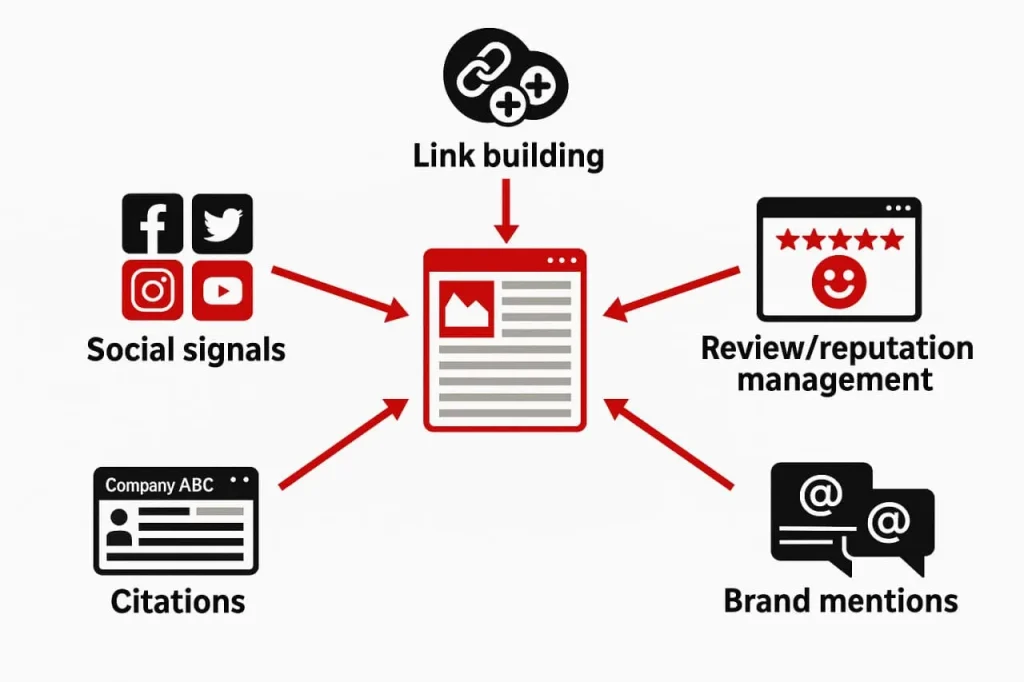
How PageRank and link analysis work
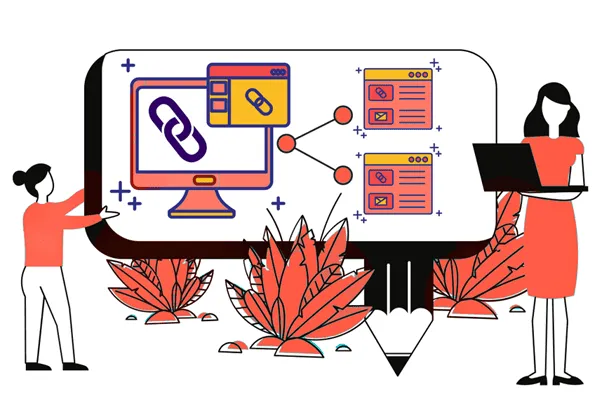
PageRank is no museum piece. In its official guide to ranking systems, Google explicitly lists “link analysis systems and PageRank” among its mechanisms and notes that PageRank has been one of its core ranking systems since Search launched. In simplified terms, every page has a certain “weight,” and it passes part of that weight to the pages it links to. The more weighty pages link to your document, the more weight it accumulates.
That said, modern link analysis goes far beyond simple math. Google takes into account where exactly a link comes from, what the linking page is about, which anchor text is used and whether the link looks natural. That is why two link sets of the same size can produce opposite results: one pushes a site into the top, while the other does nothing or even triggers penalties.
Why a site needs links and whether they affect rankings
Short answer: yes, links still affect rankings, and in 2026 both research and practice confirm it. And they pull their weight on several fronts at once.
First, they pass authority to your site (in SEO terms, “link juice”). Google simply does not consider a new site with no backlinks trustworthy, no matter how good its content is. Second, links speed up indexing: the crawler follows them and finds new pages faster. Third, quality links bring direct referral traffic, as people click through from niche sites and forums.
Now for the numbers. According to an Ahrefs study, 96.55% of pages get no traffic from Google at all, and there is a clear correlation between the number of referring domains and a page’s traffic. Tellingly, out of roughly 20 million pages with zero referring domains, only 2,997 get more than 1,000 visits per month, or about one in 6,671. Backlinko analyzed 11.8 million Google results and found that the page in position one has, on average, 3.8 times more backlinks than pages in positions 2–10. Correlation is not causation, but the picture is clear: without links, breaking into the top of a competitive niche is nearly impossible.
What about AI search? With AI Overviews and chatbot answers, part of the traffic turns into “zero-click” searches. But links haven’t lost their value. If anything, the opposite is true. Language models rely on authoritative, frequently cited sources, and authority is largely defined by the link profile. We cover this in more detail in our article on whether links affect rankings.
Links and AI Overviews: what has changed for businesses
According to an Ahrefs analysis of 300,000 keywords, the presence of an AI Overview in the results correlates with a 34.5% lower average CTR for the page in position one. Time to write SEO’s obituary? Not so fast: another Ahrefs study (March 2026) showed that 38% of AI Overview citations come from top-10 pages. In other words, strong positions in classic results increase your chance of appearing in the AI answer too, and links remain one of the tools for earning those positions. We explain how traffic is shifting and what to do about it in our article on the impact of AI Overviews on traffic.
How Google evaluates links
Not all links are created equal. One link from an authoritative site in your niche can outweigh a hundred links from junk directories. Here are the main parameters Google looks at.
| Factor | What it means | Why it matters |
| Donor trust | How authoritative the source site is | A trusted donor passes more weight |
| Topical relevance | How closely the donor’s topic matches your site | A relevant link is worth more than an irrelevant one |
| Anchor text | The text the link is placed on | Google uses it to understand the topic; over-optimization leads to a penalty |
| Placement | Where the link sits on the page | A link in the body text carries more weight than one in the footer |
| Link type | dofollow passes weight, nofollow formally does not | A natural profile contains both types |
| Neighborhood | Neighboring links and the “neighborhood” of the profile | Spam around the link is a warning sign for Google |
We put together a 12-point checklist on checking donor trust and choosing sites in our guide to checking site trust.
Rel attributes: dofollow, nofollow, ugc and sponsored
A link without extra attributes is informally called dofollow: it passes weight by default. Google recommends that site owners qualify their links as follows: rel=”ugc” for comments and forum posts, rel=”sponsored” for ads and paid placements, and rel=”nofollow” when a site does not want to be associated with the page it links to. Since 2019 Google has treated all three attributes as hints rather than strict directives, so a nofollow link from a live discussion is not “useless.” A natural profile always contains a mix of both types, and a sharp skew toward 100% dofollow looks suspicious in itself. Read more about the difference in our article on dofollow vs nofollow.
DR, DA and other metrics: what they do not show
To quickly assess donors, SEO specialists use metrics from third-party tools: Domain Rating (Ahrefs), Domain Authority (Moz), Trust Flow (Majestic). Just keep in mind where these numbers come from. Moz states plainly that Domain Authority is measured on a scale from 1 to 100, is not a Google ranking factor and has no effect on search results. It is a predictive score from the tool, not the search engine’s “internal grade.” Same with DR: it’s an Ahrefs metric that is handy for comparing sites with each other, and that’s about it.
The practical takeaway: a high DR does not guarantee a quality link. A site can have a DR of 60 and still sell links to anyone, have no organic traffic and be unrelated to your niche. That kind of DR is a participation trophy: shiny, but it proves nothing. Conversely, a small live forum with an active audience in your topic often delivers more value. We explain how to read these numbers together in our article on donor metrics: DR, DA and Trust Flow.
Types of backlinks
Links differ in how you get them, how much weight they carry and how risky they are. Below are the main types you will run into.
| Link type | Weight | Price | Risk |
| Crowd links (comments) | Medium | Low | Low |
| Outreach / guest posts | High | High | Low–medium |
| Niche edits | High | Medium–high | Medium |
| Directories and listings | Low | Low | Medium |
| Social media and profiles | Low | Low | Low |
| PBN (private blog networks) | High | High | Very high |
A healthy profile mixes different link types, and that mix is exactly what makes it look natural. Crowd marketing is the easiest place to start: it is safe, inexpensive and closely resembles genuine mentions. Read more about what crowd marketing is and when it works in a separate article. For a full classification with a breakdown of each type, see our piece on types of backlinks.
The main ways to earn links
Link type answers the question “which link,” while the method answers “how do I get it.” These are the approaches you will see most often:
- Linkable content. Studies, calculators, templates and glossaries: people link to them because they are easy to cite.
- Digital PR. News, expert commentary and original data for the media. It earns brand mentions and links from publications.
- Outreach. You contact owners of niche sites and agree on a guest post or a mention.
- Crowd marketing. Helpful answers on forums and in discussions with a relevant link. This is exactly what our forum links service does.
- Broken link building. You find links on other sites pointing to pages that no longer exist and offer your content as a replacement.
- Unlinked mentions. If a site already mentions your brand without a link, a polite email is often enough to get one added. Sometimes the cheapest link you’ll ever get costs one “thanks for the mention.”
What a link profile is
A link profile is the full set of backlinks to your site with all their characteristics: the number and quality of referring domains, the anchor text ratio, link types and growth dynamics. Google looks at the profile as a whole, not at individual links. A healthy profile looks natural: varied donor types, a majority of naked URL and branded anchors, and steady growth without sharp spikes. An unhealthy profile gives itself away with exact-match anchor spam, look-alike donors and jumps in growth. For how to assess a profile and analyze a competitor step by step, see our article on the link profile.
White hat, gray hat and black hat link building
Let’s be honest: almost any link building other than purely natural link earning is formally treated by Google as an attempt to manipulate search results. Google’s spam policies define link spam as creating links to or from a site primarily for the purpose of manipulating rankings. Examples include buying or selling links for ranking purposes, excessive link exchanges, automated programs that create links and large-scale guest posting campaigns with keyword-rich anchors. What really separates the methods is risk, so it helps to sort them into three groups.
White hat methods
White hat methods have the search engine’s blessing: quality content that people link to on their own, digital PR, and work with reviews and brand mentions. The risk is zero, but results are slow and take resources.
Gray hat methods
Gray hat is where most people actually live: crowd marketing, paid outreach placements, niche edits and buying permanent links. Formally this goes against Google’s guidelines, but when done carefully (natural anchors, quality donors, reasonable velocity) the risk is minimal. This is the zone where most SEO specialists work, and buying links safely is entirely realistic if you follow the rules.
Black hat methods
Black hat methods include doorway pages, cloaking, hacked sites, mass PBNs and spam blasts. The risk here is maximal: Google applies penalties for these methods, up to complete removal from the index. We do not use black hat methods and do not recommend them, since a short-term result almost always ends in losing the site. A site that rockets up on a PBN in a week usually comes down just as fast, only this time outside the index. A detailed breakdown is in our article on black hat SEO.
| Group | Examples | Speed of effect | Penalty risk |
| White hat | Useful content, digital PR, brand mentions | Slow | Minimal |
| Gray hat | Crowd links, outreach, niche edits, permanent links | Moderate | Low when done carefully |
| Black hat | PBNs, spam blasts, hacked sites, doorways | Fast but short-lived | Very high |
How to evaluate a specific link: 8 questions before you buy
Metrics help you weed out obvious junk, but make the final call only after you’ve looked at the page with your own eyes. Before paying, ask yourself eight questions:
- Is the site alive: are there new posts or messages from the last few months?
- Does the site have its own organic traffic, not just a high DR?
- Is the donor (or at least the specific thread or section) topically close to your page?
- Is the page where the link will sit indexed?
- How many outbound links are on the page and where do they go: to useful resources or to casinos and pills?
- Does the link make sense in context: would a real person click it?
- What will the anchor be, and does it fit your anchor plan?
- Can you verify the placement: will you get the exact URL, and is there a replacement guarantee if the link is removed?
Part of this check can be automated with our free donor site checker: it shows the basic signals worth looking at before you pay.
From our practice
When we checked 16.5 thousand forums in October 2026, 90% turned out to be alive, but that does not mean you can post on them. Among forums where we were able to check threads, 68% had no external links at all in the threads we checked: moderators delete them or do not let them through. Among forums with a visible date of the last post, only 58% had new posts in the previous three months. And only about 10% of live forums are in Ukrainian. So out of thousands of “forums in the database,” only a few percent are suitable for quality crowd links, and it is site selection, not link volume, that determines the result.
The tier 1, tier 2, tier 3 model
A tiered link building model is a way to strengthen the links themselves. The logic works like this:
- Tier 1: links pointing directly to your site. These are the highest-quality and most expensive donors.
- Tier 2: links pointing to tier 1 pages, boosting their weight and speeding up indexing.
- Tier 3: an even larger and cheaper layer that supports tier 2.
The idea is to pass weight to your site through intermediate tiers while keeping risky links out of your main profile. The model makes sense in competitive niches, but it requires care: a clumsy setup turns it into a spam pyramid. For most projects, quality tier 1 links are enough at the start. Read more in our article on tier 1, tier 2, tier 3.
How much link building costs
The cost depends heavily on the method and the niche. Approximate market ranges:
- Crowd links: $1 to $5 per placement.
- Outreach / guest post: $20 to $200 and up, depending on the site’s trust.
- Permanent link in an article: $10 to $100.
- Full turnkey strategy: from a few hundred dollars per month.
For comparison with the global market: Ahrefs, citing an Authority Hacker survey of 755 link builders, reports that 74.3% of them buy links and that the average price of a paid link is $83. Ahrefs itself advises against buying links, so the decision is always yours and should be based on a risk assessment.
At Links-Buy, the price of a manually placed crowd or forum link depends on order volume, with a minimum order of 20 links:
| Order volume | Price per link |
| 20–39 links | 86 UAH |
| 40–79 links | 79 UAH |
| 80–99 links | 76 UAH |
| 100+ links | 70 UAH |
Prices are approximate and depend on the niche, volume and competition; we will calculate the exact cost for your project. If you need a ready estimate for your task, check our link building services or the current price list. Our link budget calculator will help you estimate a monthly budget for your niche.
How long it takes to see results
A link starts working not when it is placed but after Google crawls the linking page and takes it into account. Recrawling alone can take anywhere from a few days to a few weeks, and ranking changes usually become noticeable after several months of consistent work. That is why link building is planned in quarters rather than weeks and judged by trends: the number of referring domains, the share of indexed links, the visibility of target pages and organic traffic. You can check rankings every morning after your first link goes live, but it mostly exercises your nerves, not your site.
Common beginner mistakes in link building
Most link problems come not from “bad Google” but from a handful of typical mistakes. We’ve seen them dozens of times. Knowing them in advance will save you budget and protect your site from penalties:
- Buying links in bulk in the first month: a sharp spike that looks unnatural to the search engine.
- Overusing exact-match commercial anchors instead of partial-match, branded and naked URL anchors.
- Links of only one type (for example, only directories): the profile ends up lopsided.
- Chasing quantity at the expense of donor relevance and trust.
- Not monitoring indexing: Google simply ignores some of the links you paid for.
- Building links to a technically broken site: the money is spent, but there is no effect.
- Choosing donors by DR or DA alone without checking traffic, topic and a live audience.
- No report with exact URLs: without one you cannot verify that links were actually placed and have not disappeared.
Nearly all of these mistakes come down to haste and working without a plan. Link building is a marathon, not a sprint: what matters is not a one-time purchase but systematic growth of quality links spread out over time.
From our practice
Beginners often assume that “forum link = nofollow.” Our check shows otherwise: among forums that allow external links at all, 49% use dofollow, 32% use nofollow or ugc, 10% are mixed and another 8% route links through a redirect. Among forums with visible signatures, 43% allow links in signatures, and 48% of those are dofollow. That is why in our work the dofollow share is usually around half, depending on the niche, and the report shows the type of every link.
Link building launch checklist
Before you buy your first link, go through these steps:
- Fix your technical health and content: links will not save a broken site.
- Build your keyword list and pick the priority pages to promote.
- Analyze the link profiles of 3–5 top-ranking competitors. This is your donor map.
- Create an anchor plan with safe ratios (more branded and naked URL anchors).
- Plan steady link growth without sharp spikes.
- Start with safe types: crowd marketing and quality outreach.
- Track link indexing and ranking changes.
For the anchor step, try our anchor text generator: it distributes branded, naked URL and commercial anchors in safe proportions.
We cover a full step-by-step six-month strategy with a purchasing plan in a separate piece on link building strategy from scratch.
Don’t want to spend months hunting for sites by hand or gamble with penalties? Leave the backlink growth to specialists. We will pick safe donors for your niche, build an anchor plan and ensure steady growth: order link building services or buy crowd links with manual placement.
A practical post-purchase checklist: Bought links but see no results: 8 reasons and how to check each one.
Sources
- Google Search Central: A guide to Google Search ranking systems: link analysis systems and PageRank
- Google Search Central: Spam policies for Google web search: definition of link spam
- Google Search Central: Qualify your outbound links to Google: nofollow, ugc and sponsored attributes
- Moz: What is Domain Authority?: DA is not a Google ranking factor
- Ahrefs: 96.55% of Content Gets No Traffic From Google: referring domains and traffic
- Backlinko: We Analyzed 11.8 Million Google Search Results: backlinks of position-one pages
- Ahrefs: Buying Backlinks: share of link builders who buy links and the average price
- Ahrefs: AI Overviews Reduce Clicks: lower CTR for position one
- Ahrefs: AI Overview citations and the top 10: 38% of citations come from top-10 pages